

Trending Now
- “The by-election should be the beginning of the downfall of the TVK Govt.” – Leader of the Opposition Udhayanidhi Stalin
- “DMDK will remain with the DMK. I told brother Stalin that there will be 100% cooperation in the by-election. I will definitely campaign.” – DMDK General Secretary Premalatha (interview)
- “Stalin did not extend greetings on Vinayagar Chaturthi; that is why he lost the election.” – criticises L.Murugan
- MoU Worth Rs.11,000 crore signed in London in the presence of CM Vijay.
Coimbatore


KMCH Study Reveals Alarming Health Prevalence in India: One in Three at Risk of High Blood Pressure, One in Two for Diabetes

 September 20, 2026

Kovai Medical Center and Hospital (KMCH), a 2250 bed Quaternary care hospital group with close to four decades of service to the region, has long been at the forefront of introducing new technologies and cutting-edge healthcare services for the benefit of patients.
*Dr. Nalla G. Palaniswami, Chairman and Managing Director,* feels that the proportion of published papers and health research in India continues to be small compared to Western countries. However, the scope for healthcare research is huge in India, considering the burden of communicable and non-communicable diseases in our country.
Kovai Medical Center and Hospital (KMCH) established the KMCH Research Foundation in 2015 to study the non-communicable diseases (NCDs) such as diabetes, hypertension, and obesity in India. Its flagship initiative, the KMCH NCD Study, followed the same communities across rural, semi-urban, and urban India for over ten years (2015–2026), guided by the philosophy “Detect early, Understand progression and Prevent NCD diseases.”
A decade of surveillance points to one clear trend: The study found obesity in the population rose from 43.1% in 2015/16 to 57.0% in 2025/26, with the burden climbing even higher among women (63.3%) and young adults aged 20–40 (61.4%). Hypertension and diabetes showed a similar upward trajectory over the same period. Researchers also found widespread metabolic clustering — abdominal obesity, high blood pressure, elevated glucose, and abnormal lipids occurring together — driving early, silent vascular damage, including coronary atherosclerosis detected in adults with no symptoms at all. Anemia was also found alongside these risks points to a complex, dual health burden.
Tracking the same individuals over the decade sharpened the picture: nearly one in three healthy adults developed hypertension, more than one in two with normal blood sugar progressed to prediabetes or diabetes, and one in three adults with prediabetes went on to develop full diabetes. More than one in three healthy adults became overweight or obese, one in five developed early signs of arterial disease, and more than one in four developed anemia — underscoring the case for early, community-level detection over reactive, symptom-driven care.
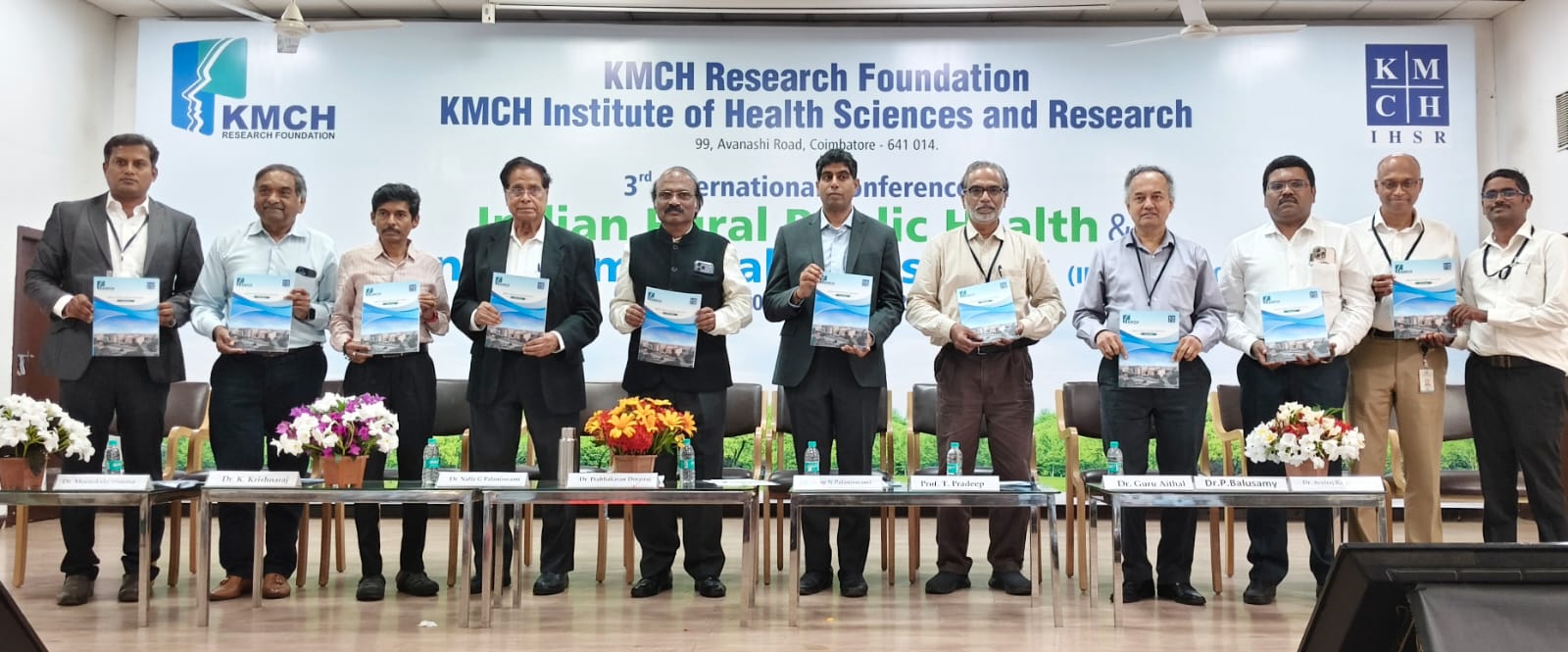
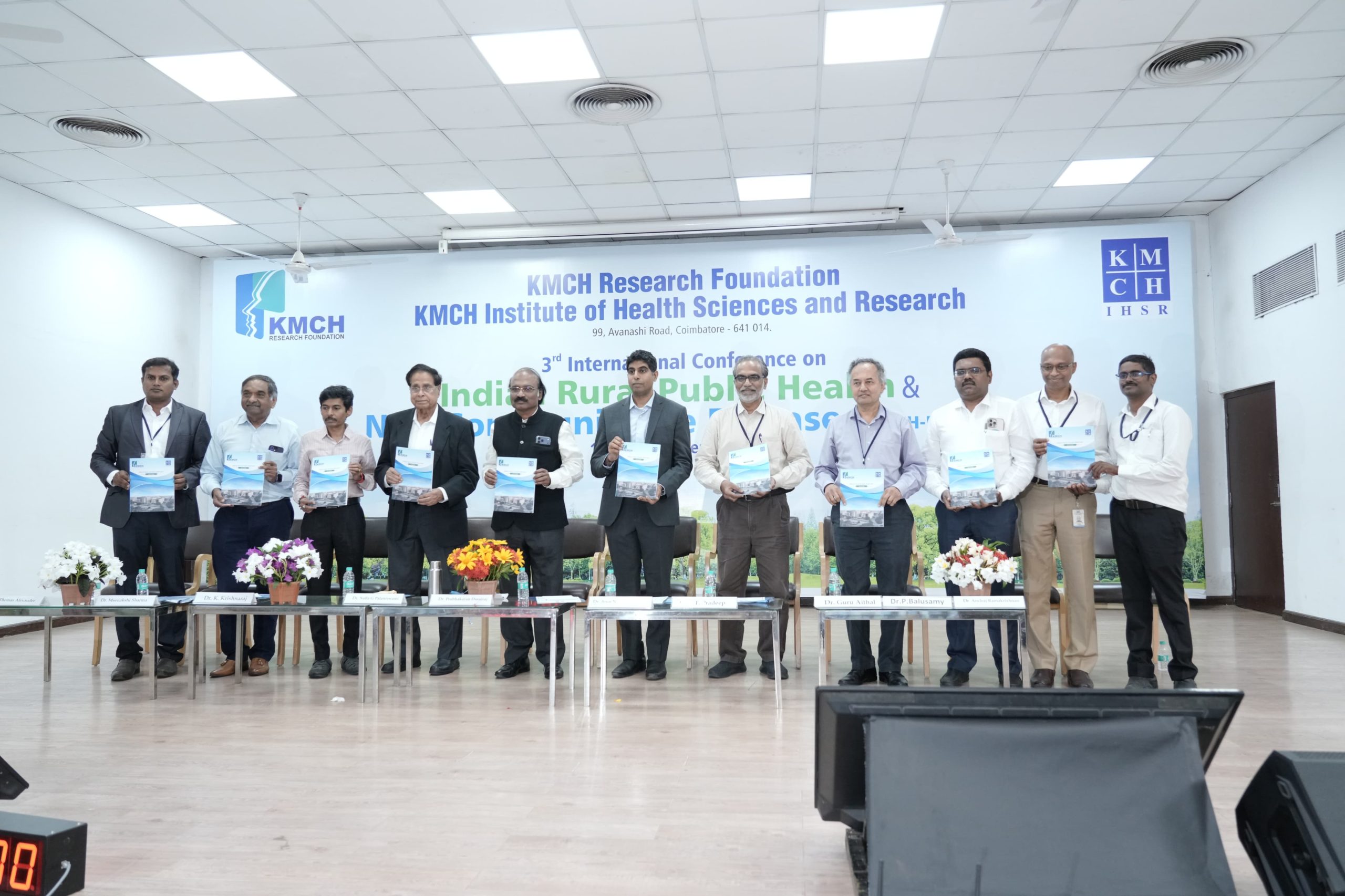
To share these findings and foster collaboration, KMCH conducted the 3rd International Conference on Indian Rural Public Health and Non-Communicable Diseases (IRPC NCD) on 19th and 20th September 2026 at Dr. NGP Arts and Science College, Kalapatti, Coimbatore. The conference brought together clinicians, researchers, public health professionals, policymakers, faculty, students, with experts from UK, Switzerland, Canada, and across India presenting research through Oral and Poster Presentations.
Dr. Nalla G. Palaniswami, Chairman, KMCH, inaugurated the conference and told, “Our goal is to find exact numbers of NCD in this study population. These study findings will be really helpful for the government for policy consideration and public health planning.” He has introduced Dr. Thavamani Devi Palaniswami, Young Investigator Award, to encourage young and enthusiastic investigators.
Delivering the keynote, Dr. Arun Palaniswami, Joint Managing Director, KMCH, added: “By identifying early biological markers and localized community risk factors, we can build targeted, sustainable health interventions that protect future generations across rural, sub-urban, and urban India.”
Dr. Arulraj Ramakrishnan, Consultant Hepatologist and Interventional Endoscopist, and Director, KMCH Research Foundation, said: “As a clinician, I see every day how much damage a disease can do before it’s ever diagnosed. This decade-long study confirms what we’ve long suspected — early, community-level screening isn’t optional, it’s essential.”