

Trending Now
- The makers have announced that ‘Meesaya Murukku 2’, directed by and starring Hip Hop Tamizha Aadhi, has grossed Rs.51.3 crore so far.
- “Do not be deceived by paying in advance on unfamiliar firecracker websites just because they offer low prices and discounts.” – Minister Keerthana
- “He did not speak up about releasing water, nor about stopping the construction of the dam. Is the TN Govt colluding with the Karnataka Govt and supporting actions that betray TN? Is Vijay afraid the Karnataka CM?” – EPS
- “AIADMK could not have won 47 constituencies without PMK. Without PMK, AIADMK could not even have won the Edappadi constituency.” – Minister Aadhav Arjuna
- “With murders taking place one after another, for whom is the CM running this ‘Reels Govt’ where no one is safe?” – Opposition leader Udhayanidhi Stalin
Coimbatore


Endangered New Plant Species Discovered in Pollachi, Named After Educationalist Dr. N. Mahalingam

 November 11, 2025
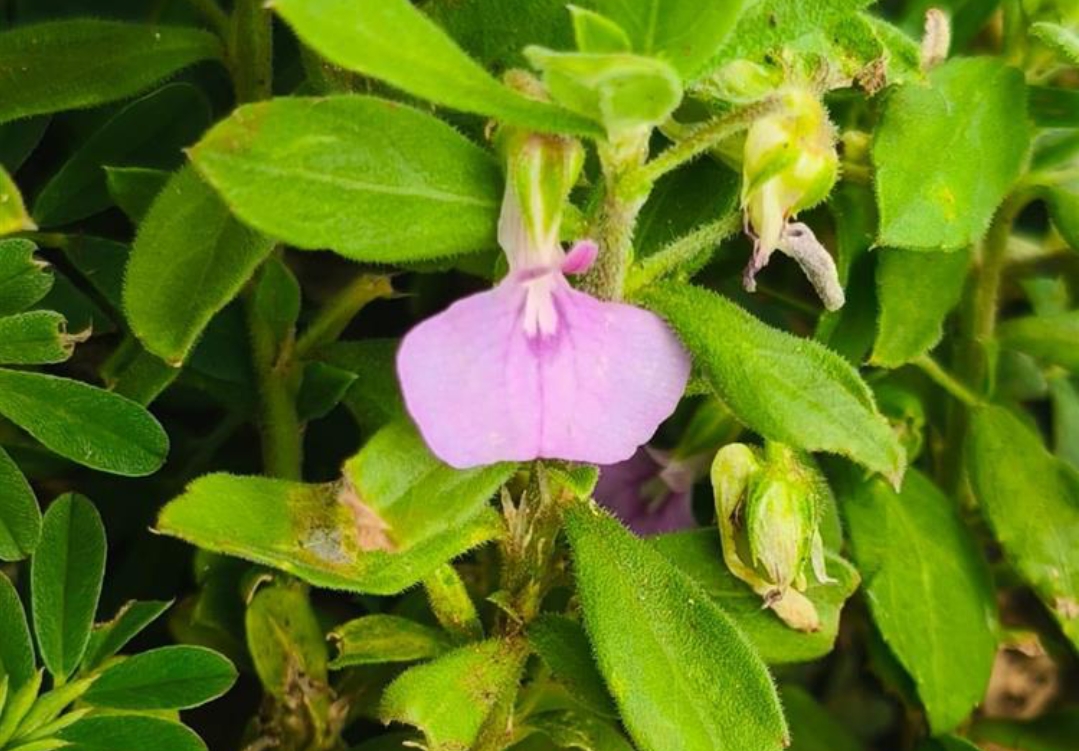

Researchers from NGM College, Pollachi, have made a significant contribution to Indian flora by identifying a new plant species, Afrohybanthus mahalingamii, from the Pollachi’s local ecosystem, which, according to the researchers is entirely new to science.
A small herb found in the agricultural areas, it has now been published in the prestigious international science journal, Phytotaxa.
A New Addition to India’s Flora
The newly discovered species has been named Afrohybanthus mahalingamii. It belongs to the Violaceae family and adds to the rich biodiversity found near the foothills of the Anamalai Tiger Reserve. This discovery brings the total number of Afrohybanthus species recorded in India to seven.
Crucially, the plant has been named to honour the institution’s founder, Arutchelvar Dr. N. Mahalingam, a respected educationalist and philanthropist of Tamil Nadu.
The research team, led by Dr.A Sarvalingam includes R Ramasubbu,A Bechu Punnen, and C Menaka, along with the final year B Sc Botany Students S Kayalvizhi, M Valarmathi, E Radhamani, K Saranya,S Mumthaj Begaum and F Irfan kareem, pinpointed the location of the discovery to areas including the NGM College campus and surrounding dryland areas of Pollachi.
Critically Endangered Status Highlights Urgent Need for Conservation:
The new species is a small, prostrate, much-branched herb that flowers and fruits between June and December. Its morphology distinguishes it from its close relatives, featuring a densely hirsute stem, ovate or obovate leaves, and a higher number of seeds per capsule. The species has been preliminarily assessed as Critically Endangered (CR) under the IUCN (International Union for Conservation of Nature) guidelines.
“The formal discovery of Afrohybanthus mahalingamii is a moment of great pride for our institution and highlights the floristic richness present even in seemingly common areas like our campus ecosystem,” said Dr A Sarvalingam. “However, its immediate classification as Critically Endangered is a wake-up call. We must prioritize urgent conservation efforts to protect this valuable and unique part of Tamil Nadu’s natural heritage.”