

Trending Now
- “The by-election should be the beginning of the downfall of the TVK Govt.” – Leader of the Opposition Udhayanidhi Stalin
- “DMDK will remain with the DMK. I told brother Stalin that there will be 100% cooperation in the by-election. I will definitely campaign.” – DMDK General Secretary Premalatha (interview)
- “Stalin did not extend greetings on Vinayagar Chaturthi; that is why he lost the election.” – criticises L.Murugan
- MoU Worth Rs.11,000 crore signed in London in the presence of CM Vijay.
India News


Citizenship Amendment Act: Court refuses to put controversial law on hold

 January 23, 2020
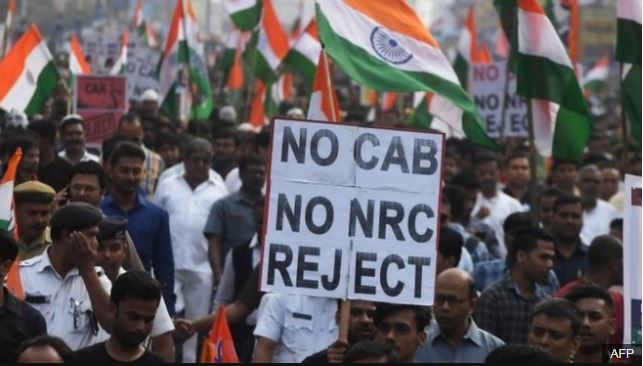

India’s Supreme Court has refused to put on hold the implementation of a controversial new citizenship law.
The court also asked the government to respond within a month to a clutch of petitions challenging the law’s constitutional validity.
The Citizenship Amendment Act (CAA) was passed in December last year, prompting outrage and protests across India.
The law offers citizenship to non-Muslims fleeing religious persecution from three nearby countries.
Around 30 people have died in over a month of protests against the law.
On Wednesday, the Supreme Court hinted that it may refer the law to a larger constitution bench in the future – but for now, it has only asked the government to reply to pending petitions.
Citizenship Amendment Bill: India’s new ‘anti-Muslim’ law explained
Several petitions argue that the law is illegal, claiming that it grants citizenship on the basis of religion – which goes against the country’s secular values enshrined in its constitution. Those challenging this new law include political parties, civil society and Muslim groups.
What is the law about?
The act offers amnesty to non-Muslim illegal immigrants from three countries – Pakistan, Bangladesh and Afghanistan.
It amends India’s 64-year-old citizenship law, which currently prohibits illegal migrants from becoming Indian citizens.
It also expedites the path to Indian citizenship for members of six religious minority communities – Hindu, Sikh, Buddhist, Jain, Parsi and Christian – if they can prove that they are from Muslim-majority Pakistan, Afghanistan or Bangladesh. They will now only have to live or work in India for six years – instead of 11 years – before becoming eligible to apply for citizenship.
The government says this will give sanctuary to people fleeing religious persecution, but critics argue that it will marginalise India’s Muslim minority.
Who is protesting and why?
For more than a month, there have been numerous protests and demonstrations across Indian cities.
Opponents say that faith cannot be made a condition of citizenship.
But others protesting – particularly in border states – fear being “overrun” by new arrivals from the three neighbouring countries.
Student demonstrations have dominated the protests but many of them have focused less on the law itself and more on the alleged police brutality against protesters.
The northern state of Uttar Pradesh has seen the highest number of deaths.