

Trending Now
- “The by-election should be the beginning of the downfall of the TVK Govt.” – Leader of the Opposition Udhayanidhi Stalin
- “DMDK will remain with the DMK. I told brother Stalin that there will be 100% cooperation in the by-election. I will definitely campaign.” – DMDK General Secretary Premalatha (interview)
- “Stalin did not extend greetings on Vinayagar Chaturthi; that is why he lost the election.” – criticises L.Murugan
- MoU Worth Rs.11,000 crore signed in London in the presence of CM Vijay.
India News


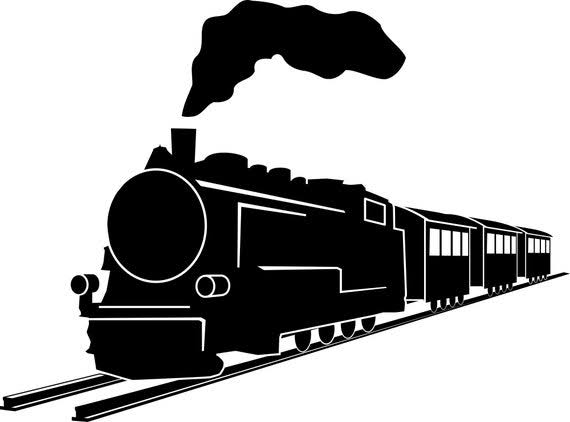
The Trains Ran On Time

 July 14, 2025

A citizen writes on the Emergency and its aftermath from his perspective.
June 1975. I had joined my post-graduate course. An emergency was declared on the night of June 25/26, 1975. The emergency was a decision taken by a small coterie of people around the Prime Minister, and the Cabinet was informed of the declaration after it took effect. It led to the curtailment of civil liberties, subversion of all democratic institutions, a crackdown on the opposition, and suspension of all fundamental rights. Two Acts, namely the Maintenance of Internal Security Act (MISA) passed on 2nd July 1971 and the Defence of India Act 4th December 1971, that gave the government powers to detain a person for up to two years without a trial on mere suspicion used without any restraint to suppress any and every opposing voice and the trains ran on time.
The day broke with newspapers reporting the arrest of several senior Opposition party leaders and look-out notices for several others. Newspapers came with blacked-out portions or empty columns signifying pre-censorship of the news reported. Rumours were swirling about a clampdown. Security forces were in full strength in prominent areas of the cities. Protests, if any, were sporadic and put down immediately. The majority of the population kept quiet. Government employees came on time to their offices. The trains also ran on time.
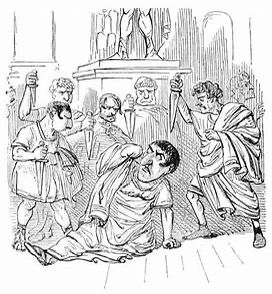
The crackdown on the opposition was brutal. The current CM of Tamil Nadu Mr. Stalin was arrested and roughed up in custody. Students who protested against the Emergency were picked up and brutalized. Custodial deaths were common. Rajan Warrier was crushed flat under a road roller. The Prime Minister announced a Twenty-Point Program for India. Her son Sanjay Gandhi announced his own Four-Point Program.
Family planning and limiting births took priority. People were picked up from the street and forcibly sterilized. Every government department was given targets, and data was dressed to give the impression that the targets were achieved. The media was tamed. When asked to bend, they were ready to crawl. Journalists became content writers for the government. There were notable exceptions. Cho Ramaswamy and the present editor, S.Gurmoorthy, who was then working for Goenka and the Indian Express, come to mind. Films critical of the government, like “kissa Kursi Ka” were not only banned but burned. Playback singers, with the notable exception of Kishore Kumar sang paeans for the government. The citizens did not care. All that mattered was that the trains ran on time.
The judiciary, with notable exceptions like Justice H. R. Khanna surrendered to the government. Suspension of fundamental rights, including the right to life, was upheld. The Supreme Court gave legal protection for custodial deaths. Their pronouncements were justified on the grounds of public good, and it was pointed out that these draconian acts ensured law and order and good governance that enabled the trains to run on time.
In 1977, elections were called, and a united opposition defeated the Congress. The unity did not last long. A divided opposition party lost the elections in 1980, and the Congress party came back to power. The first thing that the government did was destroy all evidence of Emergency excesses and wrongdoing with clinical precision. All those who were charged with crimes were let off. The rest is history. Trains stopped running on time.
So, fifty years later, what has changed? An opposition emasculated and impotent in their divisions and petty rivalry is unable to challenge a government which slowly and incrementally chipping away at the fundamental rights of the citizens. Right to Information has been diluted by an act of Parliament. Opposition party leaders are arrested on charges of corruption, but the cases do not come up for trial. A corrupt bureaucracy continues to pretend to govern. The judiciary favours the government in cases that matter with the same abject fear of retribution.
Violations of citizens’ rights are routinely justified and, in some cases, actively ordered by the Supreme Court. Custodial deaths happen with sickening regularity, with no visible action being taken. Bulldozers are used with impunity. Thugs continue to operate without fear. The media plays handmaid to the government. Election Commission goes about enfranchising and disenfranchising people in a ham-handed manner. Any evidence of wrongdoing is blithely dismissed as untraceable. The Supreme Court directs the use of Aadhar in one case to prove citizenship/nationality, and in another case holds that Aadhar card is not proof of identity. The citizens are afraid to protest lest they be declared anti-national. The more things change, the more they remain the same, and ominously, the trains run on time.